
Oxford-headquartered Sensible Biotechnologies has announced $47m (about £35.5m) of financing, pairing a Series A led by Oxford Science Enterprises with up to $20m of non-dilutive funding from the Slovak government and the European Union. In-Q-Tel and OTB Ventures join the cap table; the valuation was not disclosed.
Sensible Biotechnologies is developing a way of producing messenger RNA inside engineered living cells, rather than through the enzymatic, cell-free synthesis used for today's mRNA vaccines. The company is headquartered in Oxford and has roots in Bratislava, Slovakia.
The financing was announced on 6 October. Oxford Science Enterprises, the investment company built around University of Oxford science, led the Series A.
Two new investors joined: OTB Ventures, the European deep-tech fund, and In-Q-Tel, the strategic investor that backs technology of interest to the US national security community.
A long list of existing shareholders followed on. It includes Recode Ventures, Isomer Capital, Y Combinator, Backed VC, Kaya VC, Civilization Ventures and BlueYard Capital.
The family office of Christoph Huber, a co-founder of BioNTech, also took part, as did individual investors including Tim Garnett, a former chief medical officer of Eli Lilly.
The package combines equity with up to $20m of non-dilutive funding from the Government of Slovakia and the European Union. Published accounts differ on whether that $20m sits inside the $47m headline figure or on top of it, and the company did not give a detailed split.
Either way, the grant element is material to the cap table. Every dollar of non-dilutive money is a dollar of manufacturing build-out that founders and early investors do not have to fund by selling shares.
Post-money valuation, ownership stakes and the company's total funding to date were not disclosed.
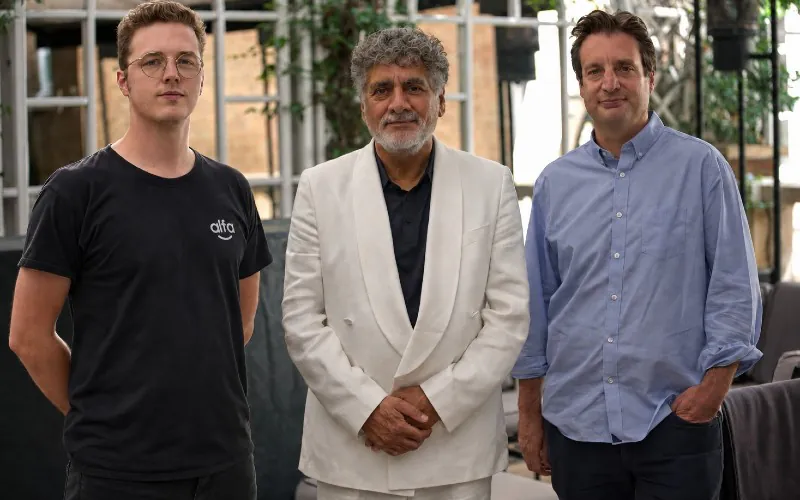
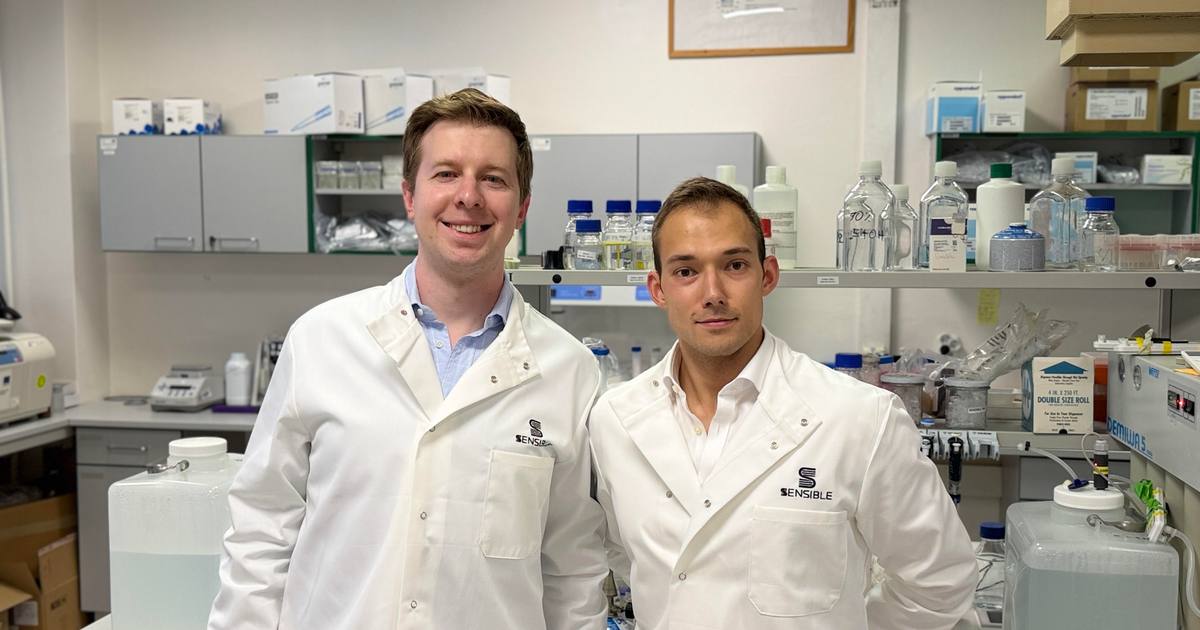
The round brings two new directors. Joel Schoppig of Oxford Science Enterprises and Dr Vishal Gulati of Recode Ventures join the board alongside co-founders Miroslav Gasparek, the chief executive, and Dr Marian Kupculak, the chief scientific officer.
Sensible's platform, called VECTOR, combines AI-assisted mRNA sequence design with cell-based manufacturing. A second technology, PromPT, captures and protects the mRNA once the cell has made it.
The company says its material shows no detectable double-stranded RNA contamination, a by-product of conventional synthesis that can trigger unwanted immune reactions. In human immune-cell assays it reports lower cytokine activation and higher protein expression than synthetic mRNA.
The work has been published in Nature Biotechnology and Cell Chemical Biology. In July 2025 Sensible signed an agreement with Sartorius Stedim Biotech covering process development, facility design and technical support for clinical-grade production.
The new money will go towards platform development, wider AI design and screening capacity, and clinical-grade manufacturing.
Gasparek said mRNA had transformed vaccines but that its largest opportunity lay in therapeutics, where cost and supply-chain limits on conventional production remain a barrier.
For Sensible, the next milestone is clinical-grade output from the Sartorius-supported process.
Original source: Sensible Biotechnologies press release via Yahoo Finance — https://finance.yahoo.com/healthcare/articles/sensible-biotechnologies-secures-47-million-110000184.html