

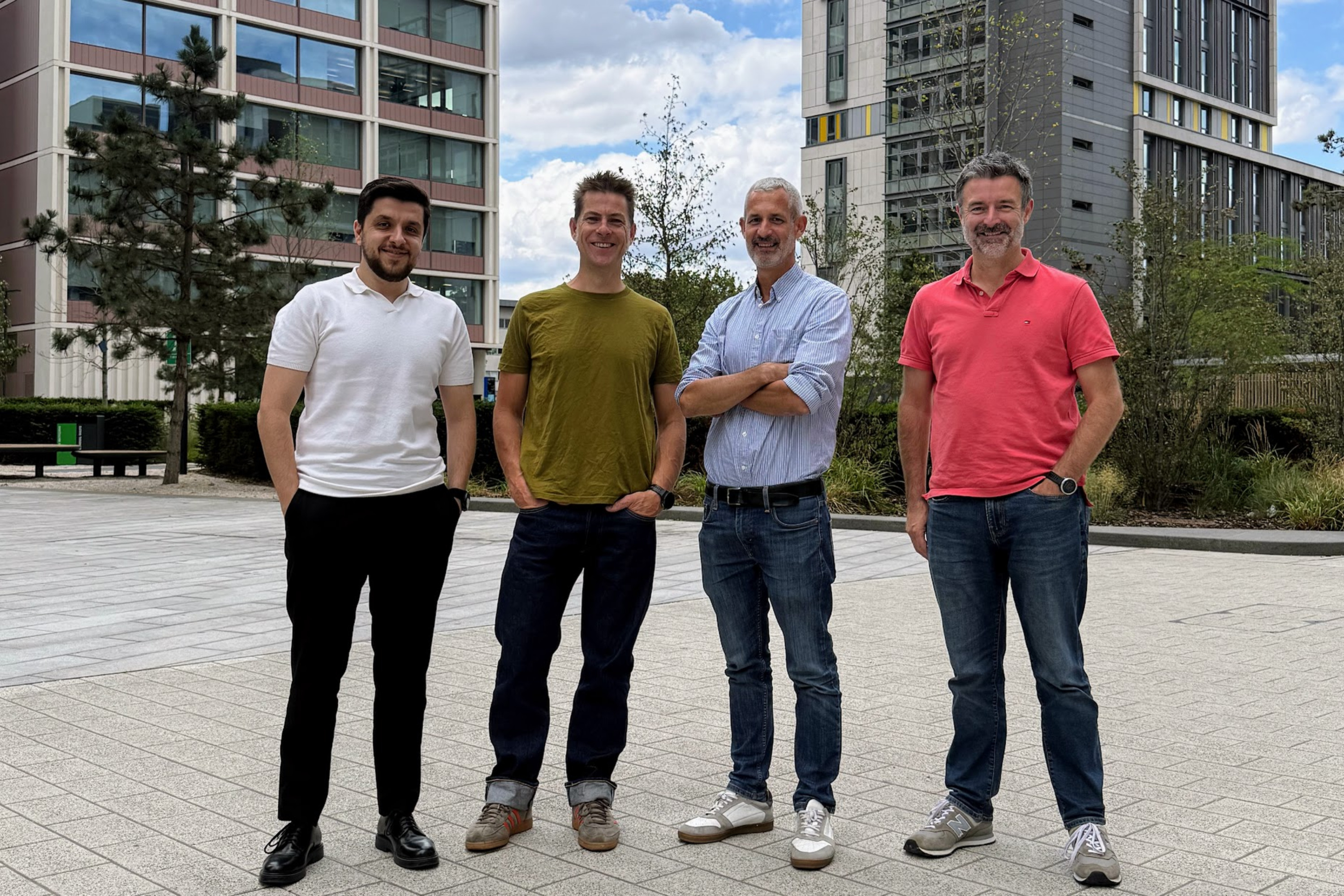
Imperial College London spinout RFC Power has closed a £10m Series A led by the state-owned British Business Bank, which wrote a £3.5m cheque, and has relaunched as Certain Energy with Centrica, LSE-listed Ceres Power and Temasek Trust's climate fund on the register.
Certain Energy was founded in 2017 as RFC Power, a spinout from the laboratories of Professor Anthony Kucernak in Imperial's chemistry department and Professor Nigel Brandon in earth science and engineering. The business is still run out of the I-HUB building on Imperial's White City campus.
The company builds manganese flow batteries for long-duration energy storage. Electrolyte sits in external tanks rather than inside the cell, so duration is increased by enlarging the tanks rather than by adding more cells. Certain Energy claims a round-trip efficiency above 75 per cent, an operating life of around 20 years with limited degradation, and marginal storage costs of roughly one-tenth those of a comparable vanadium flow system.
On the deal itself, the British Business Bank supplied £3.5m of the £10m, a little over a third of the round. Centrica, Ceres Power Holdings and the Temasek Trust's Catalytic Capital for Climate and Health fund took the balance; individual allocations were not broken out and no post-money valuation was disclosed.
The Ceres Power participation is the notable line on the cap table. Ceres, itself an Imperial spinout dating from 2001 and built on Brandon's fuel cell research, now carries a market capitalisation of about £900m on the London Stock Exchange. Its cheque marks a listed alumnus of the same laboratory reinvesting in the next one, and the rebrand from RFC Power separates the two names in the market.
Proceeds are earmarked for three things: a grid-connected MWh-class system in India, an expansion of the UK research facility, and the supply chain work needed to make projects repeatable at volume.
The commercial case rests on curtailment. The UK spent roughly £1.5bn last year paying renewable generators to switch off when the grid could not absorb their output, a figure projected to reach £8bn a year by 2030. Storage that holds power for days rather than hours is the intended answer, and the segment remains thinly capitalised relative to lithium-ion.
Chief executive Dr Tim von Werne has framed long-duration storage as the missing piece of the clean energy system, with manganese flow the chemistry he expects to win it. Executive chair Mike Selby pointed to the renewable market's exposure to external factors as the problem the technology is built to solve.
Original source: Tech.eu — https://tech.eu/2026/08/26/certain-energy-raises-ps10m-series-a-for-long-duration-battery-storage/